IThe Word
Latin occultus, the past participle of occulere, to cover over. In medieval natural philosophy an occult quality was simply one whose cause could not be perceived by the senses: the attraction of the lodestone, the purgative power of rhubarb, the influence of the stars, the virtue of a gem against poison. These were not suspect. They were an ordinary category of Aristotelian physics, contrasted with manifest qualities like heat and weight, and a great deal of respectable medicine was built on them.
The turn came with the mechanical philosophy of the seventeenth century. Descartes, Boyle and their successors wanted every effect explained by the size, shape and motion of particles, and they used occult as a term of abuse for any explanation that stopped short of that. The irony is that Newton was accused of reintroducing occult qualities with gravity, a force acting at a distance through nothing, and he never fully answered the charge. The word began to slide from describing a quality to describing a kind of knowledge, and then a kind of person.
The noun the occult in its modern sense belongs to nineteenth-century France. Éliphas Lévi and the circles around him spoke of l'occultisme in the 1850s, and by the time the Theosophical Society was founded in New York in 1875 the English word had settled into what it means now: a body of hidden or rejected knowledge concerning the powers of the mind, the influence of the heavens, the existence of spirits, and the correspondences between the visible world and an invisible one.
IIWestern Esotericism: The Scholarly Definition
For most of the twentieth century no university would touch the subject, with the conspicuous exceptions of Frances Yates at the Warburg Institute and Gershom Scholem in Jerusalem. The field that exists now was founded largely by Antoine Faivre, who held the first chair in the history of esoteric currents in modern Europe at the École pratique des hautes études in Paris from 1979. His definition of 1992 is still the one every student learns, and it describes esotericism not as a doctrine but as a form of thought with four intrinsic characteristics and two secondary ones.
Faivre's six characteristics
| Characteristic | What it means | Where to see it |
|---|---|---|
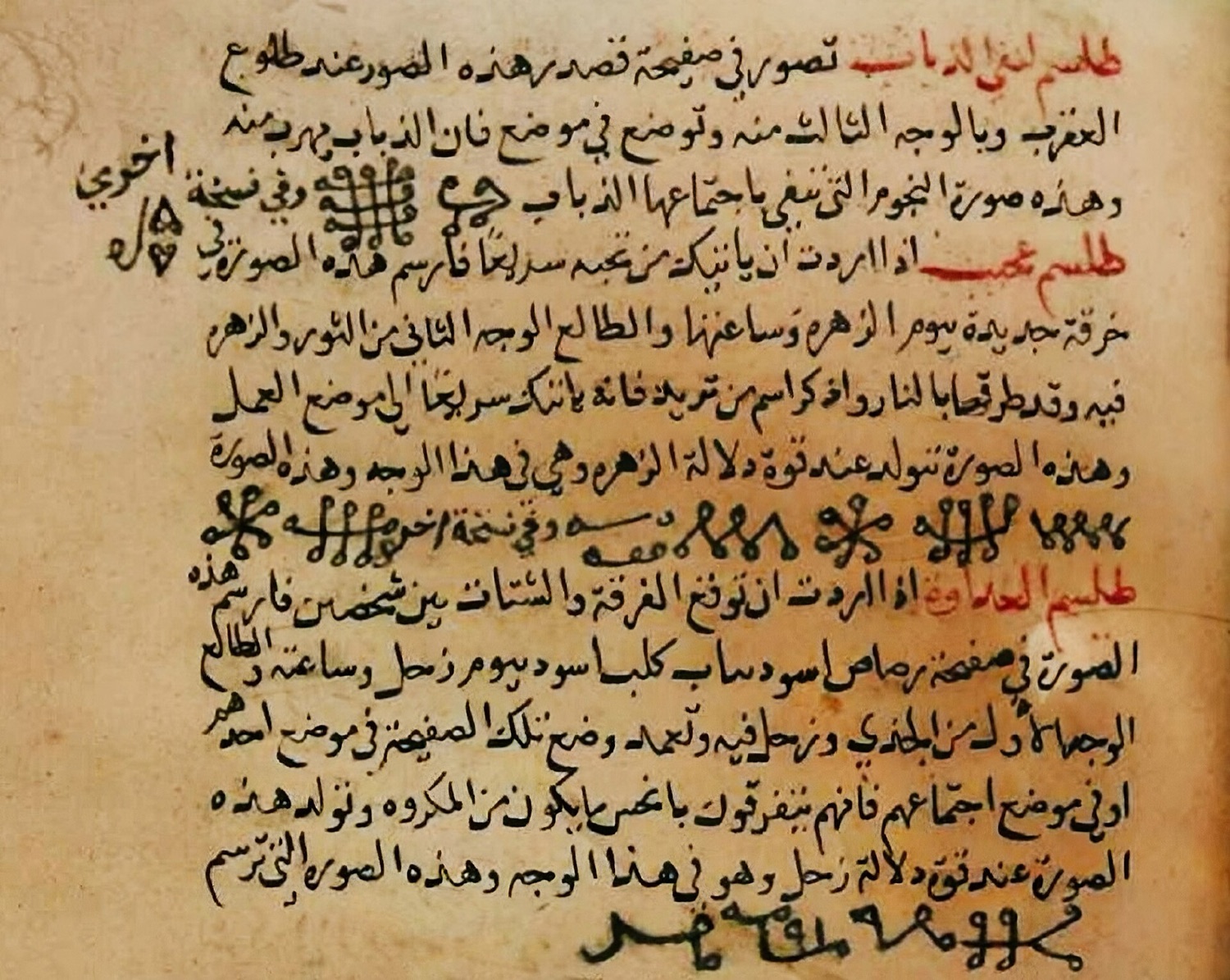
| Correspondences | Every part of the universe is linked to every other by real, non-causal relations: the planets to metals, the signs to the body, the letters to the numbers. | Talismans, astrology, Kabbalah |
| Living nature | Nature is not a mechanism but an organism shot through with soul, light and fire, which can be read and worked. | Alchemy, Paracelsus |
| Imagination and mediations | Knowledge comes through images, symbols, angels and intermediaries, and the trained imagination is an organ of perception. | Ritual magic, scrying, the tarot |
| Experience of transmutation | Knowledge is not merely acquired but transforms the knower; the goal is regeneration, not information. | Spiritual alchemy, initiation |
| Practice of concordance | All traditions share a common root, and the wise can find it beneath their differences. (secondary) | Ficino, Theosophy |
| Transmission | Knowledge passes from master to disciple through initiation, and cannot simply be read. (secondary) | The orders |
Faivre's definition has been criticised, most usefully by Wouter Hanegraaff at Amsterdam, for describing a Renaissance and Romantic ideal type rather than the whole field. Hanegraaff's own proposal, in Esotericism and the Academy of 2012, is sharper and more uncomfortable: Western esotericism is the rejected knowledge of the West, the great waste-basket into which Protestant polemicists and Enlightenment rationalists threw everything they wanted to define themselves against. On that account the occult is not a tradition at all. It is the shadow cast by the categories of religion and science when they were drawn.
I find both definitions true and neither sufficient. The first describes how the people inside the tradition thought. The second explains why the people outside it stopped listening. This library tries to keep both in view.
IIIThe Streams and How They Meet
The tradition is usually told as a river with many sources. The Hellenistic source is the richest: the Greek Magical Papyri, Neoplatonism and theurgy, Gnosticism, the Hermetica and Hellenistic astrology, all flowing out of Roman Egypt in the first centuries of the common era. The Jewish source gives the Sefer Yetzirah, the angelology of the Hekhalot literature and eventually Kabbalah. The Islamic world preserved and transformed nearly all of the Greek material, added the Jabirian alchemy and the astral magic of the Picatrix, and handed it to Latin Europe through Toledo and Sicily in the twelfth and thirteenth centuries.
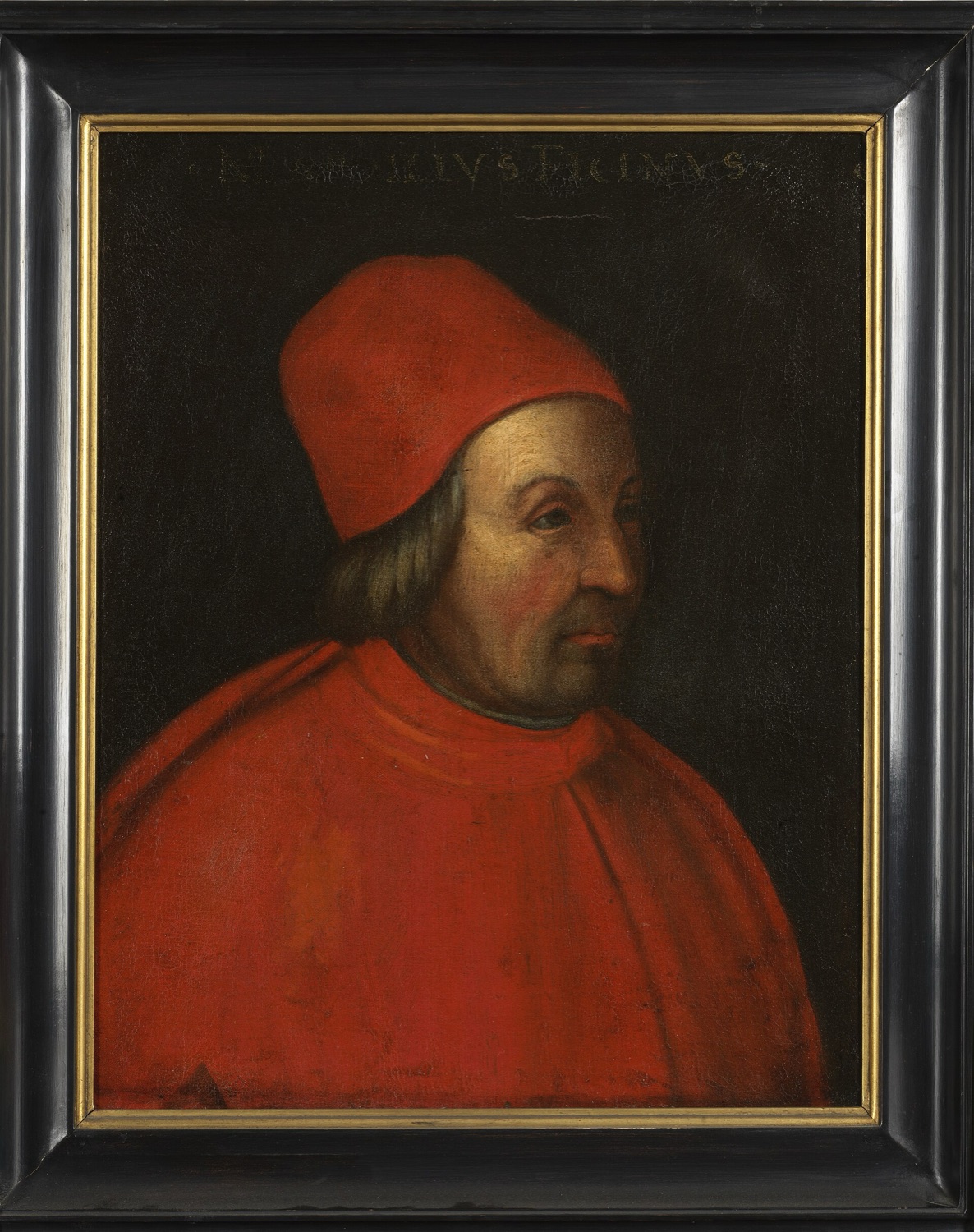
The Renaissance is where these waters meet. In the space of about fifty years Marsilio Ficino translated the Hermetica and Plato, Giovanni Pico della Mirandola set out to prove that Kabbalah confirmed Christianity, Johannes Reuchlin published the first Christian treatise on Kabbalah, and Cornelius Agrippa assembled all of it into the Three Books of Occult Philosophy. What they built, a philosophy in which the magus rises through the correspondences of the elemental, celestial and intellectual worlds, is the classical occult synthesis, and everything after is a revision or a revolt.
After it come the Rosicrucian furore of 1614, the Masonic lodges of the eighteenth century, mesmerism and Swedenborg, the Spiritualist explosion of 1848, Lévi and the French occult revival, the Theosophical Society, the Golden Dawn, Crowley, the witchcraft revival, and the New Age. Alongside all of it, from 1882, runs the attempt of psychical research to settle the matter by experiment.
IVHow This Library Is Written
Three rules. First, dates are dates. When a text claims to be ancient and is not, I say when it was actually written and how that is known. Second, claims are claims. When a medium is said to have levitated, I report who said so, under what conditions, and what was found afterwards; I do not add my own belief or my own disbelief to the record. Third, disagreement is information. Where scholars disagree, and they disagree about almost everything in this field, I state the disagreement rather than choose for you.
The one thing I will add is craft. I have made boards, planchettes, pendulums, amulets and talismans for more than twenty years, and there are things about these objects that only a maker notices: why the old boards were cut close to the golden rectangle, why a light planchette writes rubbish, why a pendulum chain must have no clasp. Where that knowledge bears on the history, it is here, and the houses where the objects are made are named at the foot of each chapter.