IThe Word and the Spellings
Hebrew qabbalah means reception or tradition: that which has been received. As the name of a movement it attaches from the thirteenth century to the esoteric theology of Jews in Provence and Spain, who presented their teaching as received tradition going back to Sinai. By a useful convention of scholarship, Kabbalah denotes that Jewish tradition, Cabala the Christian adaptation that began with Pico della Mirandola, and Qabalah the Hermetic and magical system of the Golden Dawn and its successors. They share a diagram and a vocabulary, and very little else.
IIThe Book of Formation
The oldest text of the tradition is not properly kabbalistic at all. The Sefer Yetzirah, the Book of Formation, is a short, dense cosmological work written somewhere between the third and the sixth century AD, and the most economical account of creation in any literature. God created the world through thirty-two wondrous paths of wisdom: the ten sefirot belimah, the ten numbers "without anything", and the twenty-two letters of the Hebrew alphabet, divided into three mothers, seven doubles and twelve simples. The three mother letters correspond to air, water and fire; the seven doubles to the planets, the days of the week and the apertures of the head; the twelve simples to the signs of the zodiac, the months and the organs of the body. By combining and permuting the letters God formed everything that exists, and the adept who understands the combinations understands creation.
The same book underlies the legend of the golem: a figure of clay animated by the recitation of letter combinations, which the Talmud already attributes to rabbis of late antiquity and which became attached in the nineteenth century to Rabbi Judah Loew of Prague.
IIIThe Bahir and the Zohar
Kabbalah as a doctrine appears in Provence at the end of the twelfth century with the Sefer ha-Bahir, the Book of Brightness, where the sefirot are for the first time not numbers but divine powers, attributes of God through which the hidden Godhead manifests. From Provence it passed to Girona in Catalonia, and then to Castile, where around the 1280s Moses de León produced the great work of the tradition.
The Zohar, the Book of Splendour, is a vast mystical commentary on the Torah written in an artificial Aramaic and presented as the teaching of Rabbi Shimon bar Yochai, a sage of the second century, and his companions as they wander through Galilee. Gershom Scholem demonstrated in the twentieth century that its language, its sources and its errors point to thirteenth-century Castile and substantially to Moses de León himself; more recent scholars see it as the product of a circle rather than one man. Its antiquity was questioned within a generation of its appearance. Its authority became, for many communities, second only to Scripture and Talmud.
The Zohar's God is a living drama. Above everything is Ein Sof, the Infinite, of which nothing can be said. From it emanate the ten sefirot, which are masculine and feminine, merciful and severe, and whose balance is disturbed by human sin and restored by human righteousness. The final sefirah, Malkhut or the Shekhinah, the indwelling presence, is feminine and in exile from her divine spouse. Every commandment performed with the right intention helps to reunite them.
IVSafed and Isaac Luria
The expulsion of the Jews from Spain in 1492 drove Kabbalah east, and in the sixteenth century the small town of Safed in Galilee became its capital. Moses Cordovero produced the great systematic synthesis. Isaac Luria, called the Ari, the Lion, taught for less than three years before his death in 1572 and wrote almost nothing, yet his teaching, recorded by his disciple Hayyim Vital, reshaped Judaism.
Luria's cosmology begins with a catastrophe. To make room for the world, the Infinite first withdrew into itself, the tzimtzum. Into the void it projected light, to be held in vessels. The vessels could not bear it and shattered, the shevirat ha-kelim, and the sparks of divine light fell and were trapped in the husks of matter. The purpose of human life and of every religious act is tikkun, repair: the lifting of the sparks and the restoration of the broken world. The theology of exile and redemption was so exactly suited to a people in exile that within a century it had spread through the whole Jewish world, and it helped to fuel the messianic movement around Sabbatai Zevi in 1665–66.
Abraham Abulafia, a thirteenth-century contemporary of the Zohar, represents the other great branch: ecstatic or prophetic Kabbalah, which uses the combination and recitation of divine names, breathing and head movements to bring the mystic to prophetic experience. It is closer to a meditative discipline than to a theology, and it is the branch modern practitioners most often rediscover.
VThe Christian Cabala
In 1486 the twenty-three-year-old Giovanni Pico della Mirandola published nine hundred theses he proposed to defend in Rome before all comers. Among them was the claim that no science gives us more certainty of the divinity of Christ than magic and Kabbalah. The disputation was banned, some theses condemned, and Pico fled, but the idea that Jewish esoteric tradition secretly confirmed Christianity had been launched. Pico had learned it through translations made for him by the convert Flavius Mithridates.
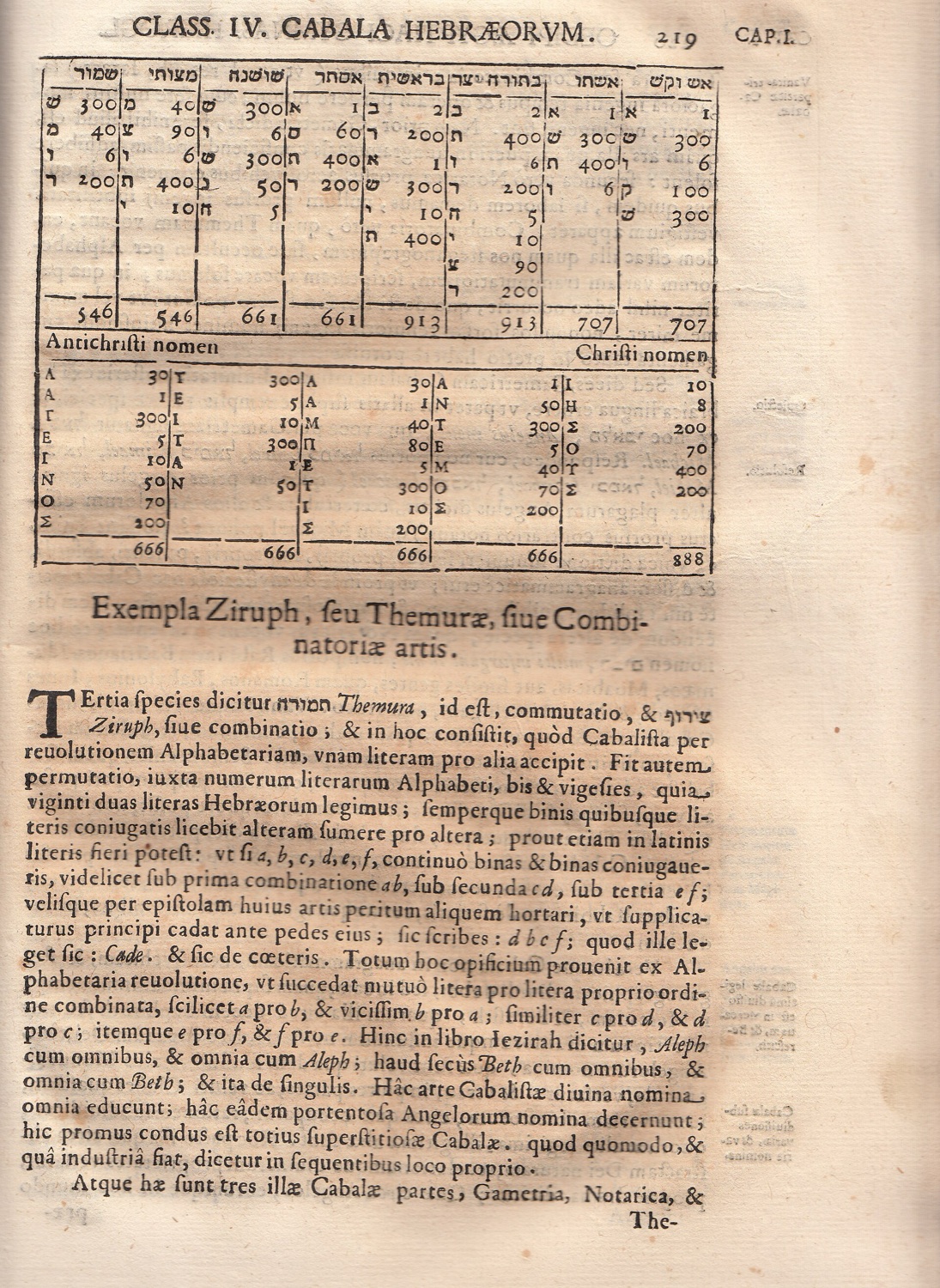
Johannes Reuchlin, the German Hebraist, wrote the first full Christian treatises, De verbo mirifico of 1494 and De arte cabalistica of 1517, arguing that the name of Jesus in Hebrew, YHSVH, was the Tetragrammaton with the letter shin, the holy spirit, descended into its centre. Agrippa built Cabala into the third book of his Occult Philosophy; Guillaume Postel translated the Zohar and the Sefer Yetzirah into Latin; Christian Knorr von Rosenroth's Kabbala denudata of 1677–84 gave Latin Europe its main access to the Zohar for two centuries.
VIThe Hermetic Qabalah
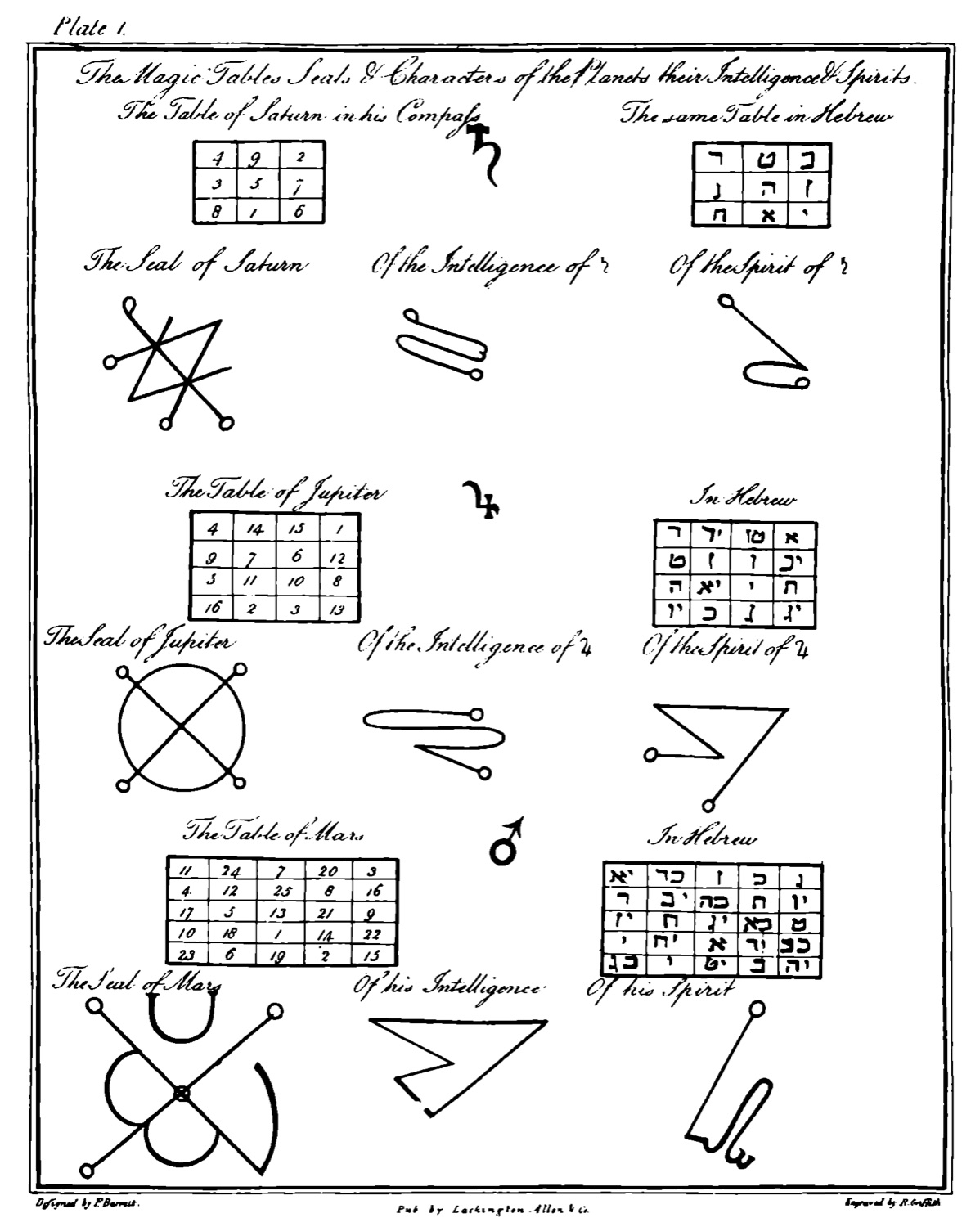
The nineteenth-century occultists took the Tree of Life and made it a filing system for the universe. Éliphas Lévi in the 1850s linked the twenty-two trumps of the tarot to the twenty-two Hebrew letters. The Hermetic Order of the Golden Dawn, founded in London in 1888, placed the trumps on the twenty-two paths of the Tree, assigned the sefirot to the planets, colours, gods of every pantheon, and grades of initiation, and required its members to memorise the correspondences. Aleister Crowley's 777 of 1909 printed them as tables, and Dion Fortune's The Mystical Qabalah of 1935 remains the most readable account of the result.
The Hermetic Qabalah is a real and coherent system and a highly productive one. It is not Jewish Kabbalah, and its founders rarely read Hebrew. Anyone who comes to the Tree through the Golden Dawn should know that the rabbis of Safed would not recognise most of what hangs on it.
VIIScholem and the Academy
For a century Jewish scholars of the Enlightenment regarded Kabbalah as a superstitious embarrassment. Gershom Scholem, a young German Jew who emigrated to Palestine in 1923, set out to prove them wrong by treating it as the serious history it is. His Major Trends in Jewish Mysticism of 1941 founded the modern study of the field. His student Moshe Idel and a long line of scholars since have revised him in many particulars, but no subject in this library was rescued from contempt by a single scholar as completely as Kabbalah was by Scholem.