IThe Invisible College
In 1614 a pamphlet printed at Kassel in Hesse announced to the learned men of Europe the existence of a secret brotherhood. The Fama Fraternitatis told the story of Christian Rosenkreutz, born in 1378, who had travelled to Damascus, Egypt and Fez, learned the hidden wisdom of the Arabs, returned to Germany and founded a fraternity of eight brothers sworn to heal the sick without charge and to meet once a year. He died in 1484 at a hundred and six, and his tomb, a seven-sided vault lit by an artificial sun and filled with books, was rediscovered in 1604, a hundred and twenty years later, as he had foretold. The brothers invited the worthy to join them in the general reformation of the world.
A second manifesto, the Confessio Fraternitatis, followed in 1615, and in 1616 The Chymical Wedding of Christian Rosenkreutz, an alchemical romance whose authorship was later claimed by the Lutheran theologian Johann Valentin Andreae. Hundreds of pamphlets appeared across Europe, from people applying to join and people attacking the brotherhood. Nobody who applied was ever answered. The physician Robert Fludd and the alchemist Michael Maier wrote defences of it. René Descartes, then a young man in Germany, was rumoured to have looked for them.
Most historians think the manifestos were the work of a circle of Lutheran scholars around Andreae at Tübingen, a utopian and satirical call for religious and scientific reform dressed as a legend, and that there was no brotherhood. The effect was nonetheless enormous. The idea of an invisible college of adepts working in secret for the good of mankind entered European culture permanently, and a long line of later orders, Masonic, occult and commercial, have called themselves Rosicrucian.
IIThe Lodges
Freemasonry grew out of the guilds of working stonemasons, whose lodges kept trade secrets and modes of recognition. In seventeenth-century Scotland and England those lodges began to admit gentlemen with no connection to the trade; the antiquary Elias Ashmole recorded his own admission in Warrington in 1646. On 24 June 1717 four London lodges meeting at the Goose and Gridiron alehouse formed the Grand Lodge of London and Westminster, and James Anderson's Constitutions of 1723 gave the new speculative Freemasonry its charter.
Masonry was not an occult order, and most Masons have never regarded it as one. But its structure, a graded initiation through symbolic death and rebirth, secret words and signs, a legend of a murdered master builder, a temple and its lost word, made it the template on which nearly every later esoteric order was built, and in France and Germany in the eighteenth century a profusion of higher degrees grafted Rosicrucian, Templar, alchemical and Kabbalistic material onto it. Pope Clement XII condemned it in 1738.
IIIThe Illuminati
On 1 May 1776 Adam Weishaupt, professor of canon law at the University of Ingolstadt, founded a secret society he named the Order of the Illuminati, to spread Enlightenment reason and oppose the influence of the Jesuits and superstition in Catholic Bavaria. It recruited through Masonic lodges, reached perhaps two thousand members including Goethe, and was banned with all secret societies by the Elector Karl Theodor in 1784 and 1785. It ceased to exist.
Its afterlife began in 1797, when the French priest Augustin Barruel and the Scottish physicist John Robison each published books blaming the French Revolution on a conspiracy of Illuminati and Freemasons. The legend of an Illuminati secretly controlling world events has been passed down, embroidered and revived ever since, most recently on the internet. The real order lasted nine years.
IVThe Theosophical Society
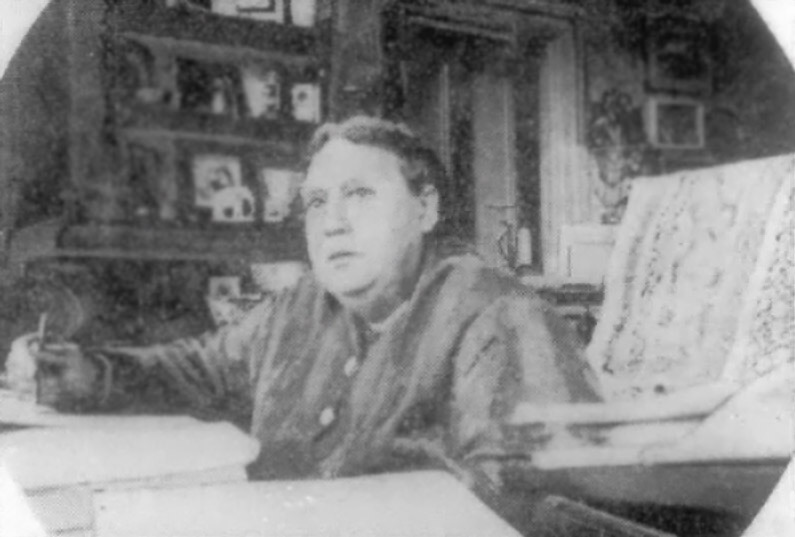
In New York in 1875 Helena Petrovna Blavatsky, Henry Steel Olcott and William Quan Judge founded the Theosophical Society, with three objects: to form a nucleus of universal brotherhood without distinction of race, creed or sex; to encourage the comparative study of religion, philosophy and science; and to investigate unexplained laws of nature and the powers latent in man. Blavatsky's Isis Unveiled of 1877 and The Secret Doctrine of 1888 presented an immense synthesis of Eastern and Western esoteric teaching, said to come from Masters of wisdom living in Tibet, including root races, cosmic cycles and a hidden history of humanity.
The Society moved its headquarters to Adyar, near Madras, in 1882, and did more than any other body to introduce Hindu and Buddhist ideas, karma, reincarnation, meditation, to the Western public; Olcott helped revive Buddhism in Ceylon, and Theosophists were among the founders of the Indian National Congress. Under Annie Besant it proclaimed the young Jiddu Krishnamurti the coming World Teacher, and in 1929 Krishnamurti dissolved the organisation built for him, saying that truth is a pathless land. Rudolf Steiner broke away in 1912–13 to found Anthroposophy. Nearly every later esoteric movement of the twentieth century, from the Golden Dawn's successors to the New Age, drew on Theosophical vocabulary.
VThe Golden Dawn and After
The Hermetic Order of the Golden Dawn, founded in 1888, is described in the chapter on ritual magic. It is enough here to say that it was the first order to teach practical magic systematically through graded initiation, that its members included some of the most distinguished writers and artists of the 1890s, and that its schism in 1900 produced a family of successors whose descendants still operate. Crowley's Ordo Templi Orientis and A∴A∴, Dion Fortune's Fraternity of the Inner Light and Paul Foster Case's Builders of the Adytum are its principal children.
| Order | Founded | Note |
|---|---|---|
| Rosicrucian Brotherhood | Manifestos 1614–1616 | Probably never existed as an order; the idea founded dozens. |
| Premier Grand Lodge of England | 24 June 1717, London | Four lodges; the beginning of organised speculative Freemasonry. |
| Élus Coëns | c. 1760s, Martinez de Pasqually | Theurgic Masonic rite; parent of Martinism. |
| Bavarian Illuminati | 1 May 1776, Adam Weishaupt | Enlightenment secret society; suppressed 1784–85; a conspiracy legend ever after. |
| Theosophical Society | 1875, New York | Blavatsky, Olcott, Judge; moved to Adyar, India, 1882. |
| Hermetic Order of the Golden Dawn | 1888, London | Westcott, Mathers, Woodman; split 1900. |
| Martinist Order | 1891, Papus | Revived the teachings of Saint-Martin. |
| Ordo Templi Orientis | c. 1904–1912, Theodor Reuss | Crowley became its head in 1925. |
| A∴A∴ (Argenteum Astrum) | 1907, Crowley and George Cecil Jones | Crowley's own initiatory order. |
| Anthroposophical Society | 1912–13, Rudolf Steiner | Broke from Theosophy; Waldorf schools from 1919. |
| AMORC | 1915, H. Spencer Lewis | The Rosicrucian order of the mail-order course. |
| Builders of the Adytum | 1922, Paul Foster Case | Qabalah and tarot; Los Angeles. |
| Fraternity of the Inner Light | 1924, Dion Fortune | Golden Dawn lineage; Christian and Qabalistic. |
| Fraternitas Saturni | 1928, Germany | Saturnian order influenced by Thelema. |
| Church of Satan | 1966, Anton LaVey | Atheistic Satanism; the Satanic Bible 1969. |
| Temple of Set | 1975, Michael Aquino | Theistic Setian initiatory order. |
VIOn Secrecy
Almost every order in this chapter swore its members to secrecy, and almost every one of them has been exposed in print, usually by a former member, often within a generation. The Golden Dawn's rituals were published by Crowley in The Equinox from 1909 and by Israel Regardie in the 1930s; Masonic rituals have been in print since the 1730s. The secret of the secret societies is that the secret is not the content. It is the experience of receiving it in the right order, in the right place, from someone who received it the same way. That is why the orders survive their exposures, and why no library, this one included, can substitute for them.